Homeowner Guide
New Home, New Radon Risks.
Just because your home has a passive radon stub doesn't mean your family's air is protected. Learn the difference.
Schedule Your Move-In TestWhat Is a Passive System?
If you recently bought a new home in Iowa, your builder likely told you it has a "radon system" installed. Because of Iowa Code HF2297, builders must install a passive radon stub.
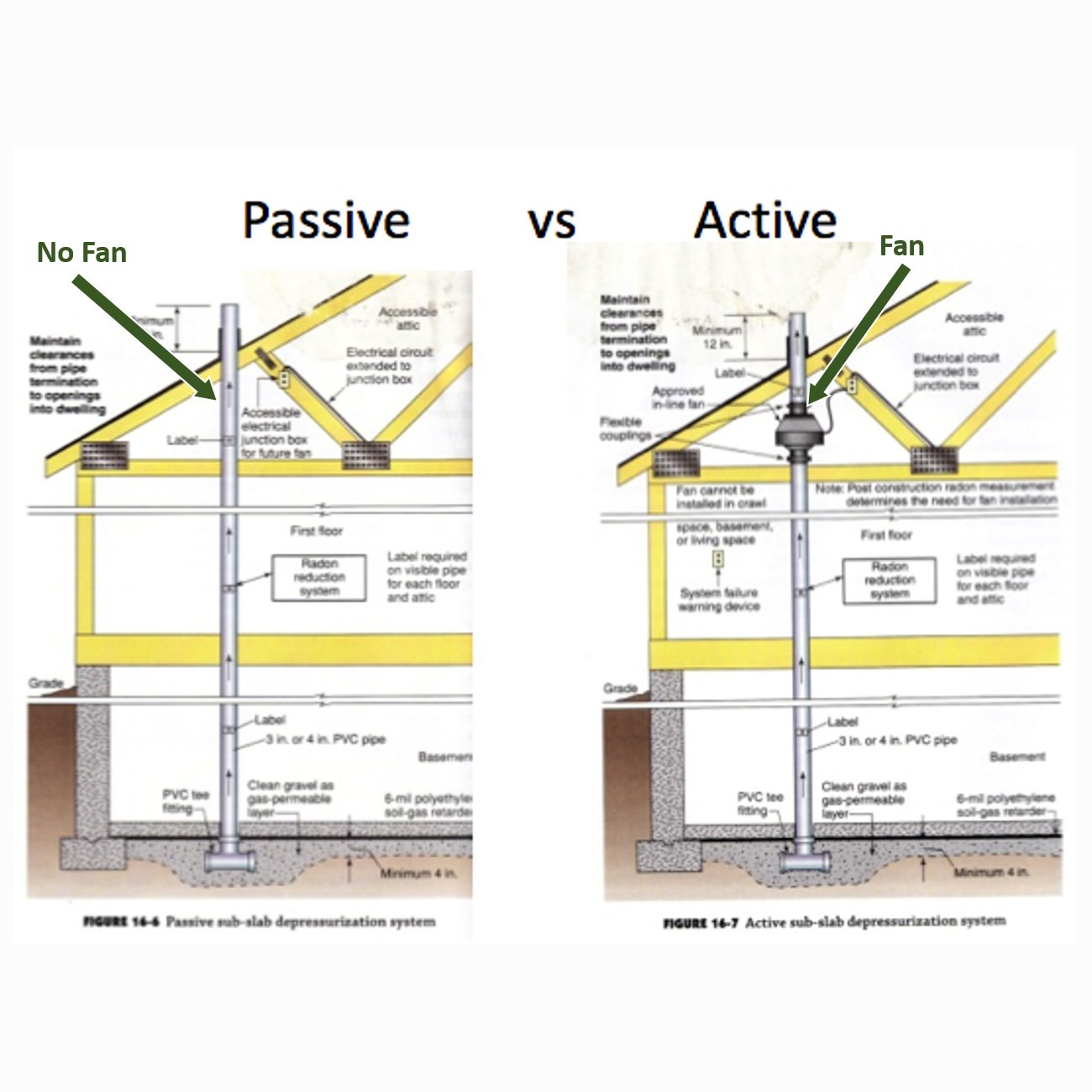
A passive system is simply a PVC pipe running from the gravel beneath your foundation up through the roof of your home. It has no fan and uses no electricity. It relies on the natural flow of warm air rising (the stack effect) to slowly vent radon gas out.
The Honest Truth About Passive in Iowa
Passive systems reduce radon by about 30% to 50%. In states with low radon levels, that might be enough. But Iowa has the highest radon concentration in the United States.
Furthermore, modern homes are built to be extremely energy efficient. They are sealed incredibly tight, meaning any radon that does seep up into your basement gets trapped inside the house. A passive stub alone rarely provides enough ventilation to drop levels below the EPA's safe limit.
What an Active System Does
An Active System takes the passive pipe already in your home and puts it to work. We install a specialized, continuous-duty Festa AMG radon fan onto the existing pipe (usually in the attic).
This fan creates a mechanical vacuum beneath your foundation. Instead of waiting for radon to float up naturally, the active system forcibly pulls the radioactive gas out of the soil and vents it safely outside.
The Good News for You
Because your builder already installed the passive pipe, activating the system is fast, clean, and far less expensive than retrofitting an older home. There's no drilling through concrete and no running pipes up the side of your house.
What To Do When You Move In
The precise timeline for protecting your new home.
Move In & Settle
Wait until construction is fully finished and your HVAC system is operating normally. Testing while builders are still opening doors or adjusting vents will cause inaccurate readings.
Test at 90 Days
Within your first 90 days of occupancy, schedule a professional CRM test. This establishes a baseline for how much radon the passive stub is (or isn't) handling on its own.
Activate if Needed
If levels are elevated, we will arrive, install the active fan system, and retest your home to guarantee the levels drop below the World Health Organization's strict 2.7 pCi/L standard.
Questions to Ask Your Builder
Before closing on a new build, ensure you have the facts about your system.
"Is the radon system active or passive?"
If they say passive, ask them if they have performed any testing to prove it works. (They usually haven't).
"Where does the passive pipe terminate?"
You need to know if it vents safely through the roof or if it's just stubbed out into the attic space (which requires immediate professional attention before activating).
"Is there an electrical outlet near the pipe in the attic?"
A good builder will have wired a dedicated 120V outlet right next to the passive stub in the attic specifically for a future active fan installation.
Know exactly what you're breathing.
Schedule a certified test to see if your new home's passive system needs an active boost.